
Drive Q4 Results With Testimonial-Powered Marketing
The businesses that shine in Q4 have one thing in common. They're the ones who have built the...


Here’s a test.
Think about the last local campaign you saw — a yard sign, a mailer, maybe a TV spot. Now ask yourself: Did you look them up online afterward? Did you see an ad on your phone? Did their name show up when you searched for the race?
If the answer is no, that campaign was invisible for half the voter journey.
That’s not a minor gap. In 2024, voters didn’t just form opinions at the ballot box. They formed them on their phones, their streaming services, and their social feeds — often weeks before Election Day. Campaigns that showed up in those moments built trust. The ones that didn’t were playing catch-up from the start.
Most campaigns think they have a digital strategy. What they usually have is a handful of tactics with no thread connecting them. There’s a difference — and it shows on Election Day.
Digital marketing for political campaigns has moved from “nice to have” to a core part of how elections are won.
The data from the 2024 election cycle is hard to ignore.
Total U.S. political ad spending surpassed $12 billion — up nearly 29% from 2020. But the bigger story is where that growth came from. Digital ad spending grew 156% over 2020 levels, reaching $3.46 billion and accounting for 28.1% of all political ad expenditure, compared to just 14.1% four years earlier.
That’s not incremental growth. That’s a strategic shift.
Digital ad spending in U.S. political campaigns grew 156% from 2020 to 2024, reaching $3.46 billion — up from just 14.1% to 28.1% of total political ad spend. (eMarketer / illumin, February 2025)
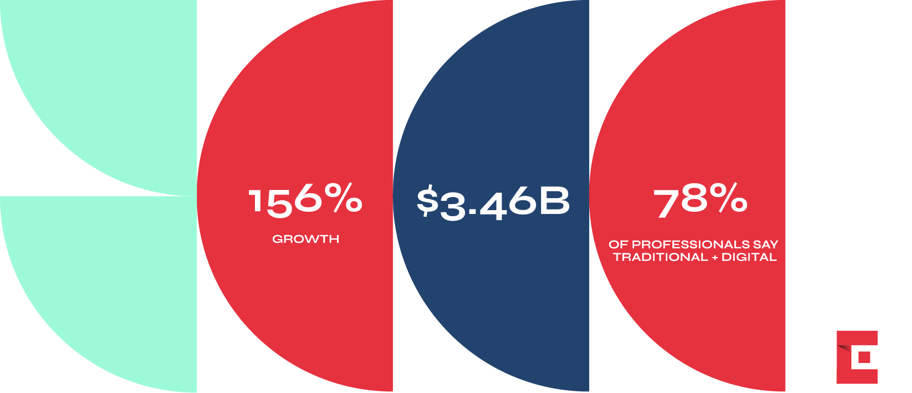
And the people running those campaigns agree. In a 2024 post-election survey by the Center for Campaign Innovation, 78% of political professionals said traditional advertising must always be combined with digital. Another 65% said digital marketing is now integrated into all aspects of their campaign or organization.
This isn’t a trend being driven by big presidential campaigns alone. It’s happening at every ballot level — because voters at every level are online.
Before you can reach voters, you need to know where they’re spending their time.
The answer, increasingly, is digital. Among adults under 30, nearly half (46%) say social media is their most common source of election news, according to Pew Research Center's 2024 election news survey.
In the 2024 election, social media was a primary news source for 37% of the overall electorate — and 45% of swing voters.
Among swing voters in the 2024 election, 45% cited social media as a primary news source — compared to 37% of the overall electorate. (Navigator Research, January 2026)
Streaming TV tells the same story. Connected TV (CTV) ad spend reached $1.56 billion in the 2024 cycle — a 506% increase over 2020. Research shows that 73% of swing voters in battleground states can be reached through streaming TV ads. And because CTV allows for geographic and behavioral targeting, it’s not a broad reach play. It’s a precision one.
If your campaign isn’t showing up in these channels, you’re not meeting voters where they are. You’re waiting and hoping they find you somewhere else.
Running digital ads is not the same thing as having a digital strategy.
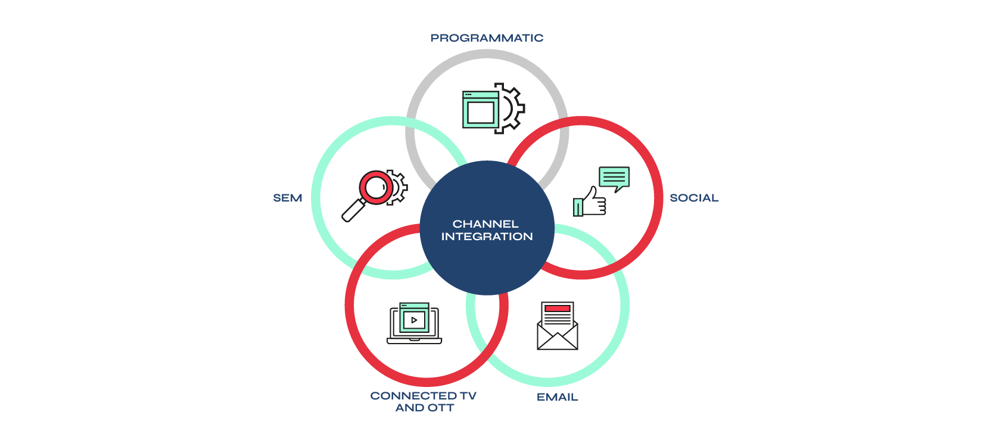
A digital strategy connects channels intentionally so each one supports the others. The strongest campaigns in 2024 didn’t just run social ads or buy CTV spots in isolation — they built coordinated systems where every channel reinforced the same message.
Five channels make up the core of a modern political digital strategy:
The channels aren’t the strategy. The strategy is making them work together — consistent message, coordinated timing, layered reach.
And none of this replaces radio. It amplifies it. When a voter hears your message on the radio and then sees a digital ad reinforcing it that evening, recall goes up. Trust builds faster. That’s how integrated campaigns create momentum.
There’s a common assumption that sophisticated digital strategy is for well-funded statewide or national campaigns. That it’s out of reach for a city council race or a school board run.
That assumption costs local campaigns races.
The tools have changed. Geotargeting and voter file matching — which means overlaying your digital ads against actual registered voter lists by precinct — make it possible to run precision digital campaigns at any scale. A candidate for a Minnesota state legislative seat can run ads that only reach registered voters in their specific district. A school board campaign can target households with school-age children in particular zip codes. A city council candidate can limit every dollar to their ward.
Consider what that means for a competitive race in a market like St. Cloud or the surrounding region. You’re not buying a TV spot that reaches the entire metro. You’re running a digital campaign that reaches your actual voters, on the devices they’re actually using, with a message tailored to what matters in your community.
That level of precision used to require a national campaign budget. It doesn’t anymore. But it does require a partner who knows how to build the strategy behind it — not just buy the impressions.
Political campaigns don’t move on agency timelines. A news cycle breaks. Your opponent makes a move. Messaging that made sense on Monday needs to be different by Wednesday. If your agency needs a week to turn around a change, that window is gone.
That’s not how we operate.
Every campaign we work with gets a dedicated strategist — not an account manager who relays requests to a back-end team, but someone who is in the data, watching performance, and bringing you recommendations before you have to ask for them. We don’t wait to be told what to do. We tell you what the data is saying and what we think you should do about it.
We’re also not parachuting into your market from somewhere else. We live and work in the upper Midwest. We know Minnesota and North Dakota audiences — how they consume media, what channels they trust, and what kind of messaging moves people in these communities. That local knowledge isn’t something you can Google. It comes from doing this work here, in these markets, for years.
And when your digital campaign runs alongside Leighton Media’s radio reach, you’re not managing two separate vendors. You’re running one coordinated strategy from a team that’s already talking to each other. That matters more than you might think when the race is close and timing is everything.
One of the most underestimated problems in political campaigns — digital or otherwise — is what happens after someone engages.
Voters visit your website. They read your positions. They watch a video. And then they leave without taking action. For most campaigns, that’s where the trail goes cold.
It doesn’t have to.
EngageIQ from Leighton Engage identifies anonymous website visitors and creates opportunities to re-engage them through structured follow-up — email, direct mail, and multi-channel outreach — without waiting for a form fill. For campaigns already investing in awareness, it’s how you make that investment work harder.
Because attention without follow-up is just visibility. And visibility doesn’t win elections. Strategy does.
Digital marketing for political campaigns is the use of online channels — paid social, programmatic display, connected TV, search advertising, email, and morel — to reach, persuade, and mobilize voters. It works alongside traditional media like radio and broadcast TV to create an integrated strategy that meets voters across every touchpoint.
In the 2024 U.S. election cycle, campaigns spent approximately $3.46 billion on digital advertising — 28.1% of total political ad spend, up from 14.1% in 2020. Digital spend grew 156% over that four-year period, according to eMarketer data published by illumin in February 2025.
Yes. Geotargeting and voter file matching let local campaigns reach specific districts, precincts, or voter segments with precision — making digital efficient even on smaller budgets. CTV and programmatic ads in particular deliver strong voter contact at competitive costs for local races.
No — and they shouldn’t. Digital advertising performs best when it reinforces traditional media, not replaces it. A voter who hears your message on the radio and then sees a coordinated digital ad is more likely to remember and act on it. Integration is the strategy.
Look for a partner with real cross-channel experience, the ability to move fast when the race changes, and genuine knowledge of your market. A dedicated strategist — not just an account manager — matters more than the size of the agency. You want someone who brings you recommendations, not just reports.
EngageIQ is a Leighton Engage tool that identifies anonymous website visitors and enables structured follow-up through email and multi-channel outreach. For campaigns, it closes the loop between awareness efforts and voter re-engagement — turning website visits into real opportunities rather than lost impressions.
Running for office — at any level — takes more than presence. It takes a plan.
Leighton Engage works with campaigns across the upper Midwest to build coordinated digital strategies that reach voters where they are, reinforce your message across channels, and adapt as the race evolves.
Let’s talk about what that looks like for yours.



The businesses that shine in Q4 have one thing in common. They're the ones who have built the...

Creating and planning your upcoming marketing strategy? Is email marketing part of it? If not, it's...
Leave a Comment