

Holly Lee
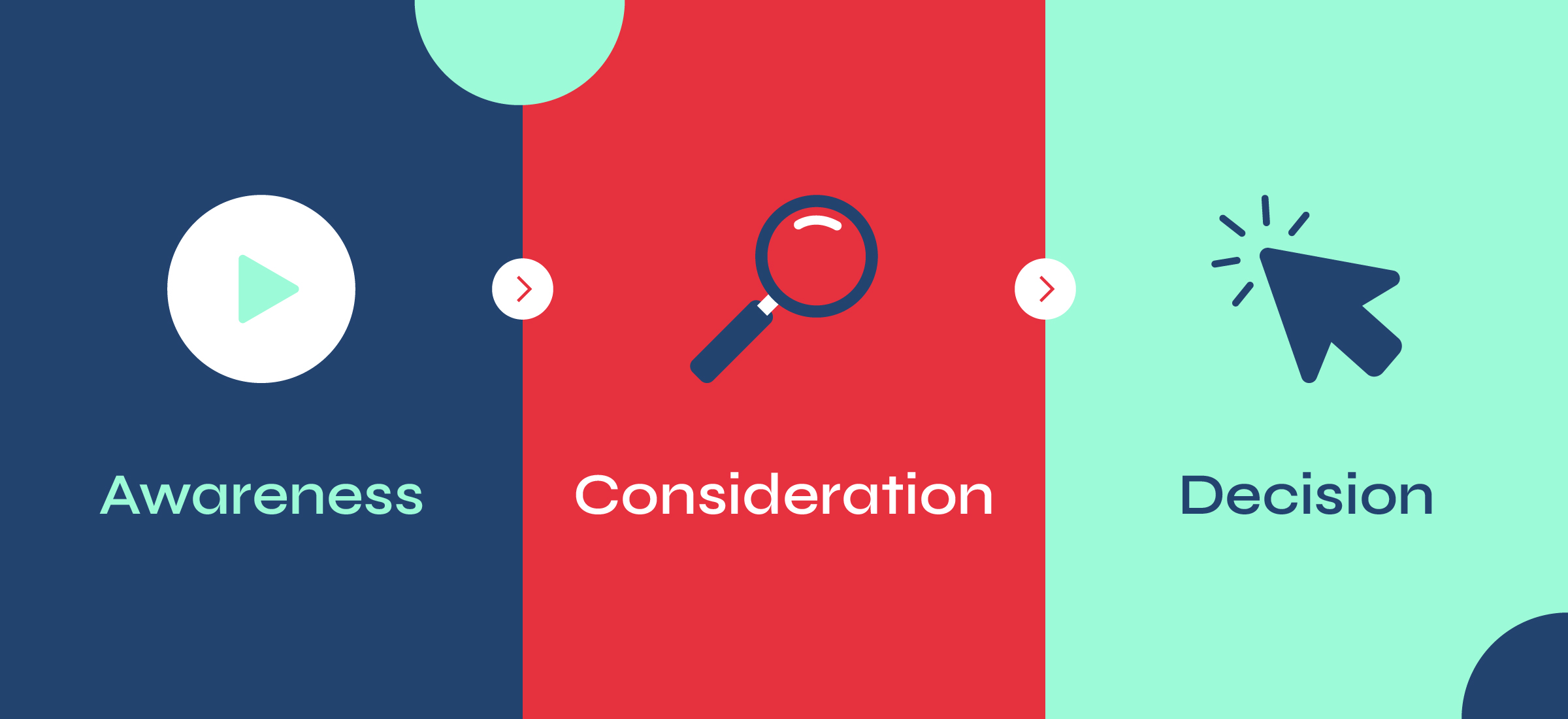
A single well-produced video ad will not carry a marketing strategy on its own. Neither will a sharp search campaign, a well-targeted display ad, or a beautifully designed landing page. Each of these does one job well, but none of them does the whole job.
Business owners often invest in one channel at a time, chasing whichever tactic promises the fastest result. When that channel underperforms on its own, it is easy to conclude the channel does not work, rather than asking whether it was ever set up to carry the strategy by itself.
Programmatic video, display advertising, search, and landing pages each serve a different purpose along the customer journey. Paired together and sequenced with intention, they build the kind of recognition and momentum that no single tactic can generate alone. That is the same thinking behind BrandsFormation, the philosophy our team at Leighton Media built its advertising approach on: a clear strategy, a message worth repeating, consistency across every touchpoint, and enough frequency for that message to stick. The BrandsFormation Customer Journey simply applies that same logic to digital, building strategy around the buyer's path instead of a list of channels.
Related: 2026 Marketing Trends for Local Business ->
Why one channel rarely tells the whole story
It is tempting to judge a campaign by whichever metric is easiest to pull: video views, click-through rate, or landing page conversions. The trouble is that a prospect's decision to buy is rarely the result of one ad. It is usually the result of several small moments of exposure that add up over time.
A person might see a video ad and not act on it, notice a display ad a few days later, and then search for the business by name once they are ready to look closer. Measured alone, the video and display ads look like they "did nothing." Measured as part of the full path, they did the work of building recognition that made the search, and the conversion that followed it, possible.
This is also where the Marketing Reality Check matters most: Impressions and likes are not proof a strategy is working, and neither is judging one channel in isolation. Real measurement means looking at how channels move a buyer forward together.
Check out the work we did for Minnesota Land Trust to get a glimpse into our strategic work.
How each tactic supports a different stage of the journey
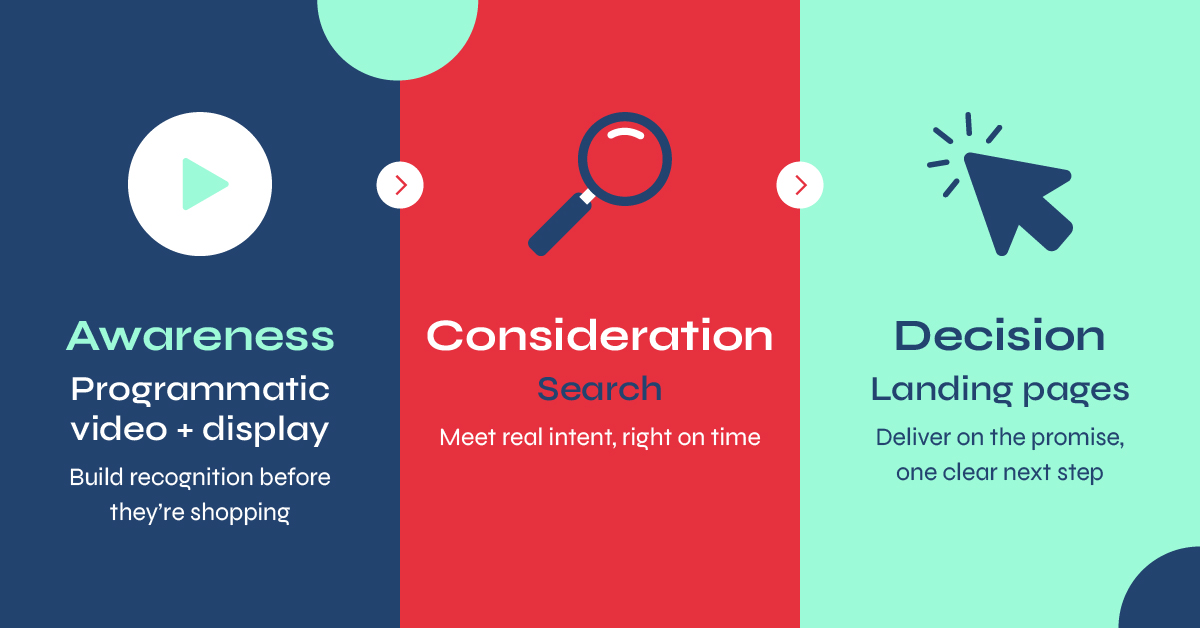
Awareness. Programmatic video and display advertising are built for reach and repetition. Their job is not to close the sale on the first impression. It is to put a business in front of the right audience often enough that the name and message start to feel familiar, well before that person is actively shopping.
Consideration. Search shows up at a different moment entirely: when someone has already decided to look. A well-built search campaign meets that intent directly, showing up with a clear, relevant message right when a prospect is comparing options.
Decision. Landing pages carry the weight of that decision. Once someone clicks, the page needs to deliver on exactly what the ad promised, with one clear next step and no distractions competing for attention. A strong ad that sends traffic to a generic or unrelated page wastes everything the earlier stages built.
Each stage depends on the ones before it. Skip awareness and search campaigns work harder and cost more to compete for intent that was never built in the first place. Skip a focused landing page and even the best-targeted ad traffic has nowhere useful to go.
What a balanced strategy looks like in practice
A balanced strategy is not about running every available tactic at once. It is about choosing the two or three that genuinely support each other for a specific goal, then keeping the message consistent across all of them so each touchpoint reinforces the last instead of starting over.
That brand consistency is what turns repeated exposure into recall. A prospect who sees the same core message and look across a video ad, a display ad, a search result, and a landing page builds trust faster than one who sees four disconnected pieces of creative that happen to be running at the same time.
Building your own balanced mix
Start by mapping where your own prospects actually spend their attention before they ever search for you by name. From there, ask whether your current channels are speaking with one voice, or whether each one was built in isolation. A strategy that pairs the right tactics at the right stage, with a consistent message running through all of them, is what turns marketing spend into measurable performance and a business people actually remember.
Related: How To Drive Marketing Results With Testimonials ->
FAQ
What is a balanced digital marketing strategy?
It is an approach that pairs multiple tactics, such as programmatic video, display advertising, search, and landing pages, so each one supports a different stage of the customer journey rather than competing for credit on its own.
Do I need to run every channel to see results?
No. A balanced strategy does not mean using every tactic available. It means identifying which two or three channels genuinely support your specific goal and customer journey, then keeping the message consistent across them.
See what a balanced strategy could look like for your business
Every business's customer journey looks a little different, which is why a template approach rarely performs as well as a strategy built around how your actual buyers move from first impression to decision.
Schedule a meeting with an Engage Digital Marketing Strategist to talk through what a balanced mix of programmatic video, display, search, and landing pages could look like for your business.

Leave a Comment